
Dec. 21, 2025
If you're trying to decide between a hedge trimmer and hedge shears (manual hedge clippers), here's the simple rule:
Choose a hedge trimmer when you need to cover more length, faster—especially for medium to large hedges.
Choose hedge shears when you want maximum control and a cleaner, more detailed finish, especially for small hedges, touch-ups, or shaping.
Below is a practical, no-fluff guide to help you pick the right tool based on hedge size, stem thickness, finish quality, and budget.
| Feature | Hedge Trimmer (Powered) | Hedge Shears (Manual) |
| Power | Electric (corded), battery, or gas | Human power |
| Speed | Fast—best for long runs | Slower—best for small areas |
| Control & precision | Good, but easier to overcut | Excellent for detail shaping |
| Cutting capacity | Depends on tooth gap / blade spacing | Better for selective snips; not for thick branches |
| Best for | Medium–large hedges, frequent trimming | Small hedges, topiary touch-ups, clean edges |
| Noise & vibration | Higher (varies by model) | Very low |
| Maintenance | Blade care + motor/battery care | Blade cleaning + occasional sharpening |
Hedge shears look like oversized scissors with long blades. They're designed for shaping and trimming soft, leafy growth, and they shine when you care about the final look.

You're trimming a small hedge or doing quick touch-ups
You want straight, crisp lines (formal hedges)
You're shaping topiary or fine details
You prefer a quiet tool and don't mind a bit of effort
They're slower for big jobs
Cutting thick, woody stems is hard work—and usually not what shears are meant for
Pro tip: Many gardeners use a hybrid approach—powered trimmer for the bulk, then shears for the finish.
A hedge trimmer uses reciprocating blades to cut quickly across a hedge surface. You'll see:
Corded electric (steady power; needs a safe cable setup)
Cordless/battery (portable and convenient)
Gas/petrol (powerful; heavier, noisier; more maintenance)
Pole hedge trimmers (extra reach for tall hedges)
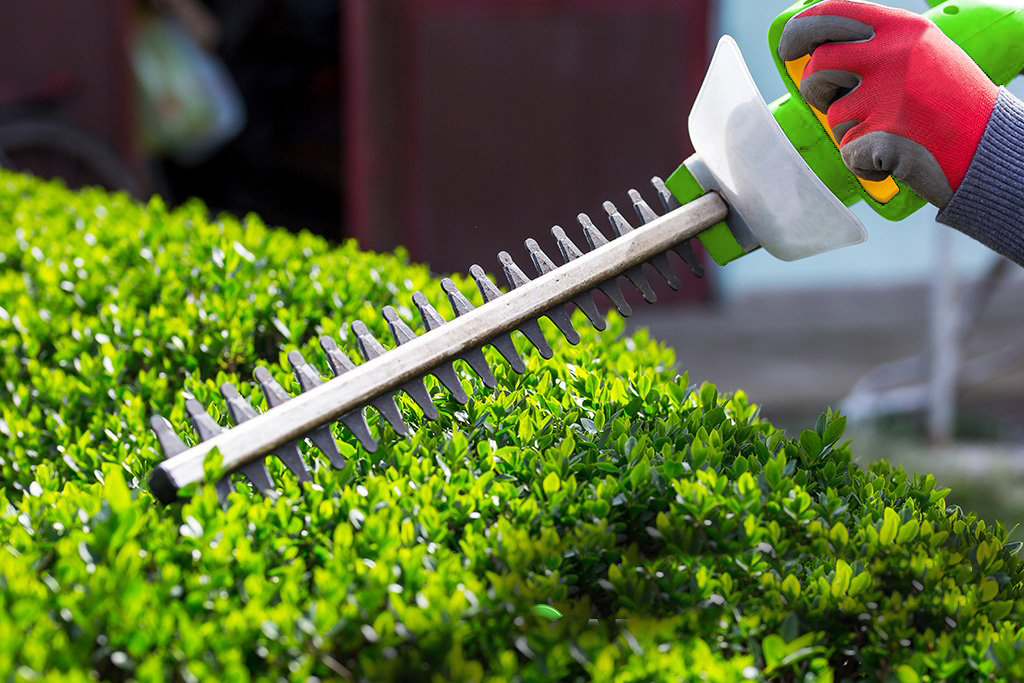
It saves time on long hedges
It's easier to keep a consistent shape over distance
It's ideal when you trim several times per season
When comparing hedge trimmers, focus on:
Blade length – longer blades cover more hedge per pass, but can feel harder to control.
Cutting capacity (tooth gap) – the spacing between teeth roughly indicates the maximum stem thickness the trimmer can handle cleanly.
Weight & balance – this affects fatigue more than most people expect.
Blade action (dual-action vs single-action) – dual-action generally reduces vibration and helps smoother cuts.
One of the most common buying mistakes is choosing a trimmer that can't comfortably handle your hedge's stem thickness.
A practical rule of thumb:
12–16 mm tooth gap: light growth / small hedges
20–25 mm: average hedge work
26–36 mm: heavier growth (closer to “overgrown hedge” territory)
If you regularly face stems thicker than your trimmer’s capacity, don't force it—use loppers or secateurs for those thicker cuts first, then use the trimmer for the outer growth.
best hedge trimmer for large hedges
Your hedge is medium to large
You trim several times per year
You want to finish the job quickly
You're maintaining long, straight runs (property lines, privacy hedges)
Corded vs cordless?
Go corded if you want steady power and don’t mind managing a cable safely.
Go cordless if you want freedom of movement, especially for hedges far from outlets.
You only have a small hedge or a few shrubs
You care most about clean lines and detailed shaping
You want a quiet, low-maintenance tool
You're doing topiary touch-ups or precise finishing
For many gardens, the most efficient setup is:
Use a trimmer to reduce overall growth
Use shears to refine edges and fix uneven spots
Check for wildlife before trimming
In many places, disturbing active nests can be illegal—always inspect your hedge first.
Aim for a hedge shape that lets light reach the bottom
A slightly narrower top than base helps reduce bare patches over time.
Use a string line for straight tops
This is the easiest way to get professional-looking results.
Trim lightly, step back, then trim again
Especially if you're new—overcutting is harder to fix than undercutting.
Whether you're using shears or a powered trimmer, basic protection makes a big difference:
Safety goggles / eye protection
Sturdy gloves
Long pants and proper footwear
For powered tools: keep bystanders away, maintain firm two-hand control, and follow your tool’s manual.
Can a hedge trimmer cut thick branches?
Only up to its rated cutting capacity (often tied to tooth gap). For thicker wood, use loppers first.
Are hedge shears better for topiary?
They're often preferred for final shaping and detail because they give maximum control.
Do I need a long blade?
Longer blades are faster on long hedges, but shorter blades can feel easier for beginners and detail work.
What gives the cleanest finish?
Usually: trimmer for the bulk + shears for final passes.
If your priority is speed and coverage, a hedge trimmer is the winner.
If your priority is precision and finish quality, hedge shears are hard to beat.
For the best results, many gardeners use both.
If you're sourcing tools for retail or wholesale, consider offering multiple options (blade lengths, tooth gaps, and handle styles) so customers can match the tool to their hedge type and workload.
Contact Us
Hello, welcome to submit any questions and suggestions. We will reply to you as soon as possible. Thank you for your support and help.
Navigation
Hebei Sinotools Industrial Co., Ltd.
Whatsapp/Wechat: +86 151 2816 2059
Tel.: +86 311 8533 5186
Fax: +86 311 8533 1200
E-mail: info@gardepot.com




Request a Quote


